
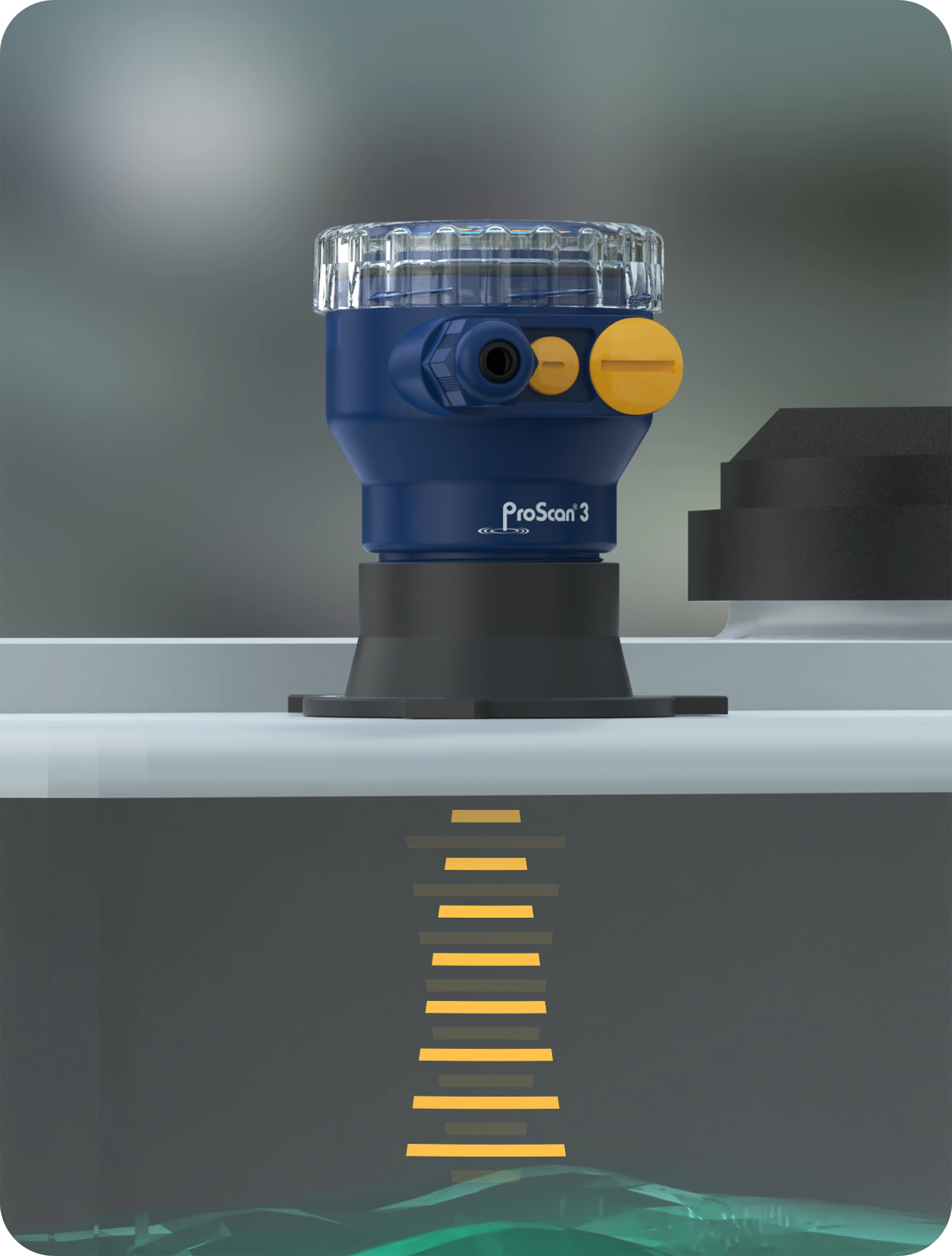
5 Reasons Why Radar LevelSensors Are Better than
Radar level sensors are revolutionizing liquid measurement by overcoming foam, vapor, and turbulence challenges. Learn how Icon’s ProScan3 80GHz sensor delivers superior accuracy, reliability, Radar
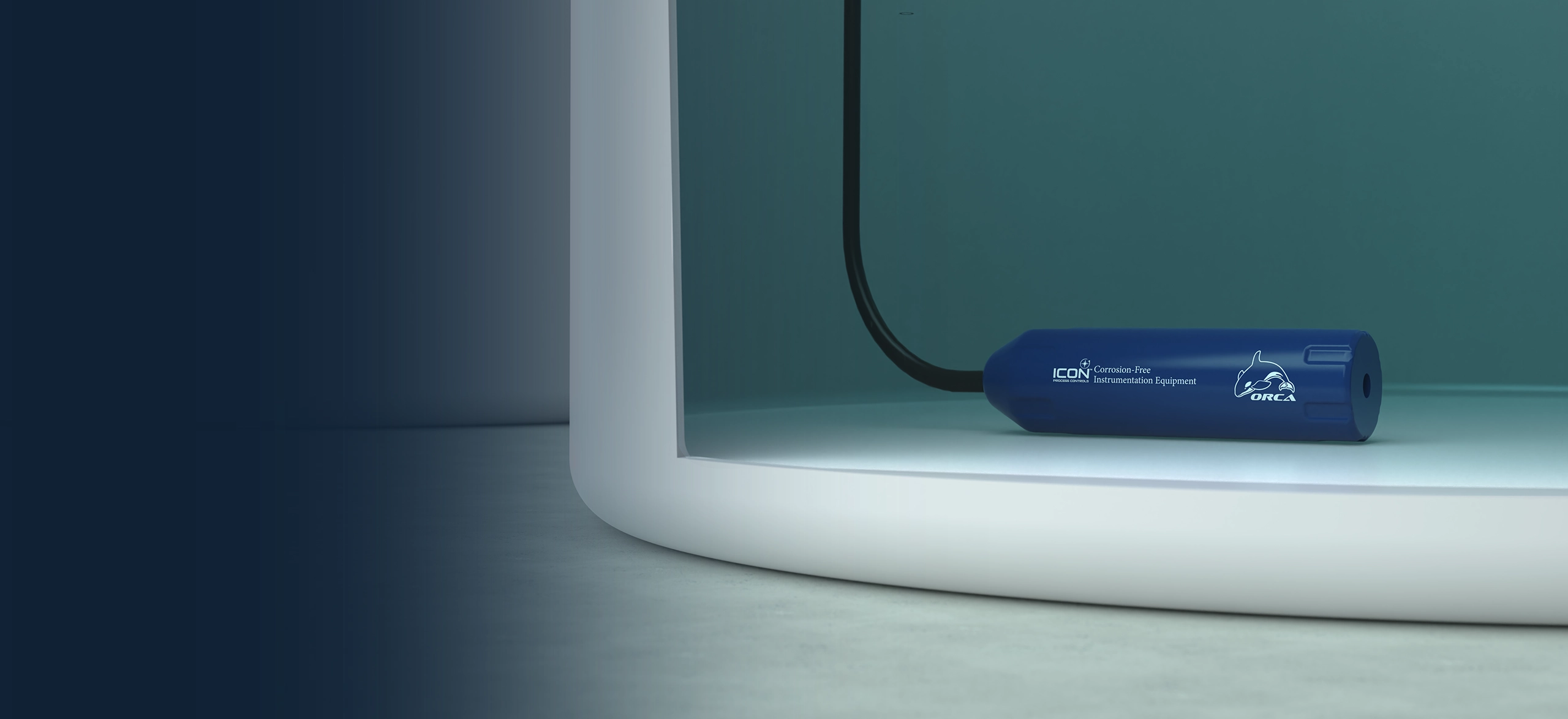
Discover the advanced performance of the LevelPro 100 Series liquid level sensors by Icon Process Controls. Engineered for industries needing precise liquid level measurement, these submersible sensors excel in harsh environments. With no moving parts and a non-clogging design, they provide unmatched reliability and accuracy across various applications.
The LevelPro 100 Series sensors deliver continuous level measurement for both corrosive and non-corrosive liquids. Unlike ultrasonic transmitters, these sensors remain unaffected by foam, vapor, or turbulence, ensuring consistent readings in challenging conditions. Built to last, they feature corrosion-resistant materials like PVC, PP, PVDF, and PTFE Teflon®, perfect for demanding chemical applications.
faq-section-tab
specification-section-tab
document-section-tab
application-section-tab
fitting-section-tab
video-section-tab
A liquid level sensor operates by detecting the presence or absence of material or determining the level of material
within a container. This is achieved using various technologies like capacitance, ultrasonic waves, or, as in the case of
radar, by measuring the time taken for a signal to bounce back from the material surface. Level sensing can be contact
or non-contact-based, depending on the method employed. A radar level sensor is a device used to measure the level of
liquids, solids, or slurries in various challenging industrial applications. It utilizes radar technology to determine the
distance from the sensor to the surface of the material being measured.
| Input Pressure Range | ||
| Level ft/H₂O | 14 | 20 | 34 | 54 | Consult Factory for Levels > 54 ft | |
| Overpressure | Psi | 210 | 290 | 290 | 380 | |
| Output Signal | Supply | ||
| Output Signal | 4–20 mA | 4–20 mA + HART (2-Wire) | 0.5–4.5 VDC Ratiometric | 0–5 VDC | RS-485 (3-Wire) | |
| Power Supply | 9–36 VDC | 0.5–4.5 VDC | 5 VDC | |
| Performance | ||
| Accuracy | <±0.5% of FS | |
| Permissible Load | Rmax = ((Vs − Vsmin)/0.02 A) Ω | |
| Influence Effects | Supply: 0.05% Full Scale/10 V | Load: 0.05% Full Scale/kΩ | |
| Long Term Stability | <±0.1% Full Scale over One Year | |
| Response Time | <10 msec | |
| Thermal Effects | Offset and Span | ||
| Thermal Drift | <±0.02% FSO/K in Compensated Range | −20 – 170°F | |
| Permissible Temperatures | ||
| Storage/Media Temperatures | PVC: 32°F to 140°F | PP: −20°F to 170°F | PVDF: −40°F to 170°F | PTFE: −40°F to 170°F | 316 SS: −40°F to 170°F | |
| Electrical Protection | ||
| Short-Circuit Protection | Permanent | |
| Reverse Polarity Protection | No Damage to Sensor | |
| Electromagnetic Compatibility | Emission Immunity According to EN 61326 | |
| Electrical Connection | ||
| Jacketed Cable | PTFE | Teflon® −40 to 200°F | |
| Cable | 3-Wire Cable with Integrated Air Tube for Reference to Atmospheric Pressure | |
| Materials | Wetted | ||
| Housing | PVC | PP | PVDF | PTFE | 316 SS | |
| Seal | FFKM – Kalrez® | |
| Diaphragm | Pure Ceramic 96% Al2O3 | 316 SS | |
| General | ||
| Current Consumption | Max. 25 mA | |
| Weight | Grams | PVC: 575 g | PP: 475 g | PVDF: 825 g | PTFE: 875 g | 316 SS: 875 g | |
| Ingress Protection | IP68 | NEMA 4X | |
| CE-Conformity | EMC Directive: 2004/108/EC | |
Radar level sensors are revolutionizing liquid measurement by overcoming foam, vapor, and turbulence challenges. Learn how Icon’s ProScan3 80GHz sensor delivers superior accuracy, reliability, Radar
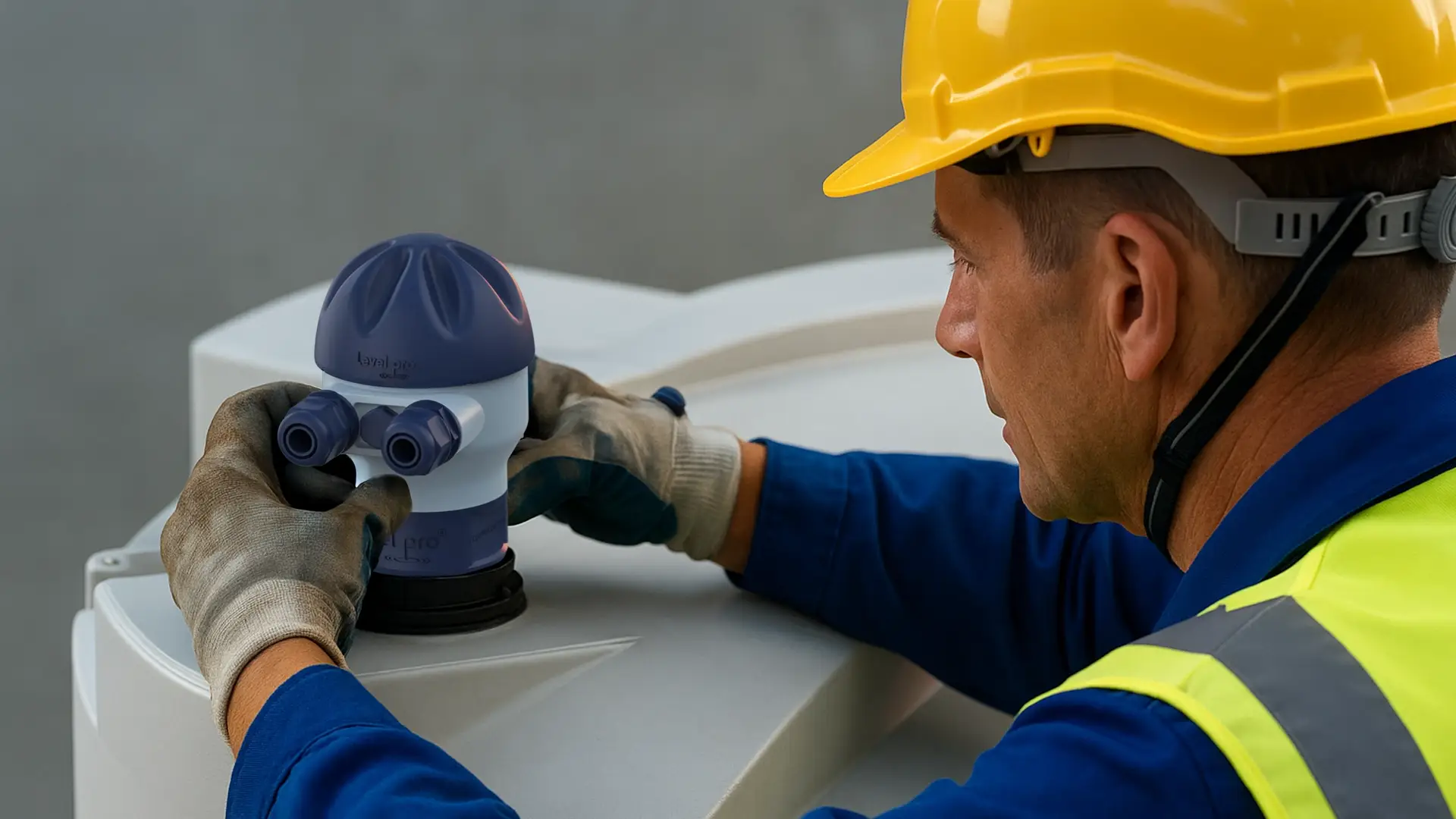
Secure, Resilient and Reliable
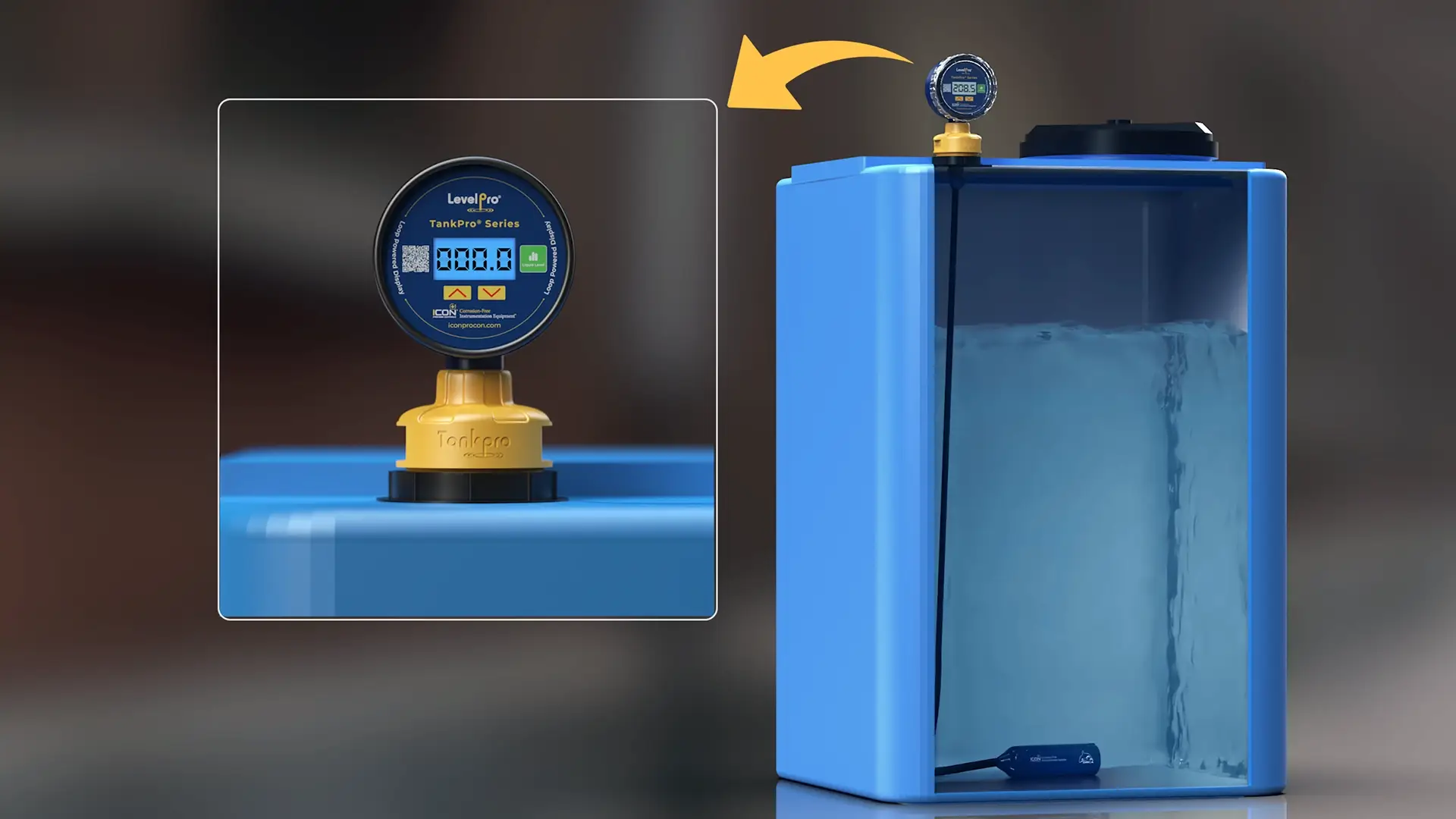
Submersible Level Sensor with Display