
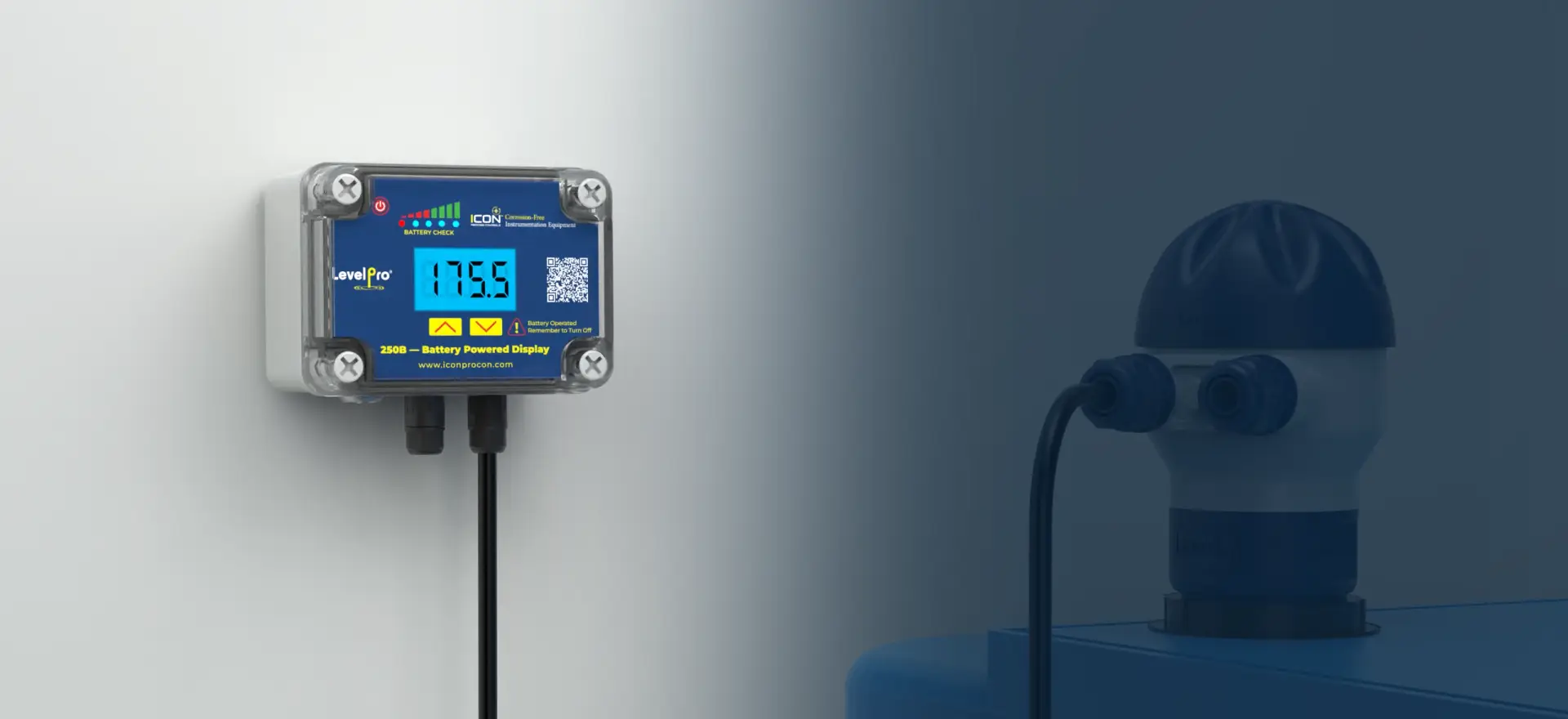
The LevelPro ITC-250B is a rugged, battery-operated level display designed for accurate and reliable monitoring in industrial environments. Featuring a super-bright 4-digit LCD with Chameleon Color Display technology, it ensures excellent visibility in any lighting condition. Housed in a corrosion-resistant NEMA 4X enclosure, the 250B is built to withstand harsh conditions. It operates on a 4-20mA input, making it compatible with a wide range of sensors, and offers intuitive programming for quick setup without complex training.
Ideal for water treatment, chemical processing, and oil and gas applications, the 250B enhances operational efficiency by preventing overflows, leaks, and system failures. Its battery-powered design provides flexible installation where power access is limited, while the durable construction ensures long-term, dependable performance. The ITC-250B is a smart, cost-effective solution for industries requiring consistent, accurate liquid level monitoring in demanding environments.
faq-section-tab
specification-section-tab
document-section-tab
application-section-tab
fitting-section-tab
video-section-tab
| Specifications | ||
| Display | 4 Digit Chameleon Color LCD (38 mm × 22 mm) | |
| Displayed Values | −999 ± 9999 | |
| Power Supply | 2600 mAh Battery Powered | |
| Protection Class | NEMA 4X | IP67 | |
| Accuracy | 0.1% @ 25°C One Digit | |
| Operating Temperature | −20 – 158°F | −29 – 70°C | |
| Storage Temperature | −20 – 158°F | −29 – 70°C | |
| Protection Class | NEMA 4X | IP67 | |
| Case | Wall Mounted | Material – Polycarbonate | |
| Dimensions (W × N × D) | 110 × 105 × 67 mm | |

Twist, align, done—bulkhead built for dome tank tops.
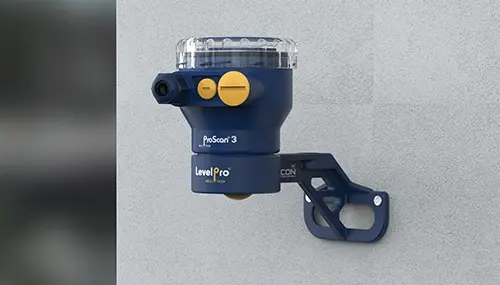
Designed for ease, just place it and you’re set.
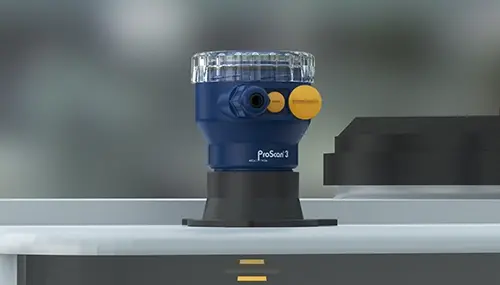
Strong by design, precise by purpose